
Blog · June 8, 2026 · 8 min read
Cybersecurity SOPs for Connected-Device Manufacturers
If you build IoT or radio products, the security of the device starts on the line. Here are the cybersecurity SOPs every connected-device maker should write.
- SOPs
- Cybersecurity
- IoT
- Manufacturing
- Compliance
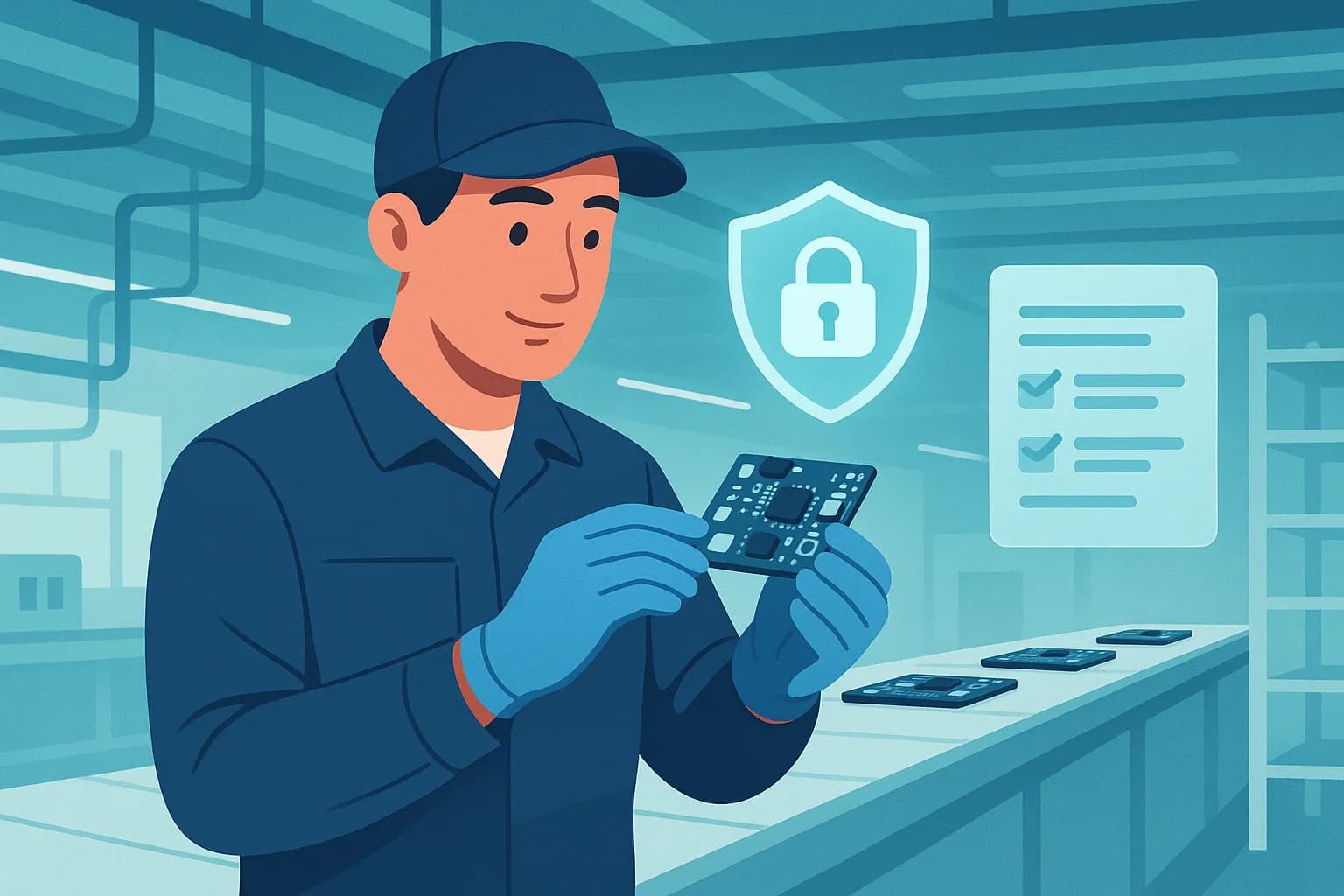
A cybersecurity SOP for a connected-device manufacturer is a written, step-by-step procedure for the security-critical moments on the production line: flashing firmware, injecting keys and credentials, enabling secure boot, handling debug interfaces, and decommissioning units. If any of those steps is done inconsistently, the product ships with a weakness that no amount of clever firmware can undo.
The security of an IoT or radio product does not start in the design lab. It starts on the floor, in the hands of whoever flashes the board and locks the debug port. This post covers the SOPs that protect those steps, and how they differ from the separate product conformity documentation that regulators ask for.
Key takeaways
- Device security depends on consistent line procedures, not just good firmware design.
- Five processes deserve their own cybersecurity SOP: firmware flashing, key and credential provisioning, secure boot, debug-interface handling, and decommissioning.
- Each SOP should name who does the step, the exact sequence, the verification, and what to do when it fails.
- A line SOP is not the same as a product conformity document. The SOP governs how you build; the conformity file proves the product meets the rules.
- Capturing these procedures from the people who actually run the line is the fastest way to get accurate, followable SOPs.
Why connected devices need cybersecurity SOPs
A connected product is only as trustworthy as the weakest unit that left your line. A single batch flashed with a debug build, or shipped with a default password, or with the test port left open, is enough to turn a secure design into a recalled product. SOPs exist precisely because humans under time pressure skip steps, and a security step skipped once can compromise an entire production run.
Regulators have noticed. The EU's cybersecurity requirements for radio equipment now expect manufacturers to show that security is built in and controlled, not bolted on. That makes the line procedures below worth writing down properly, both to build the product right and to evidence that you do.
The five cybersecurity SOPs every connected-device line needs
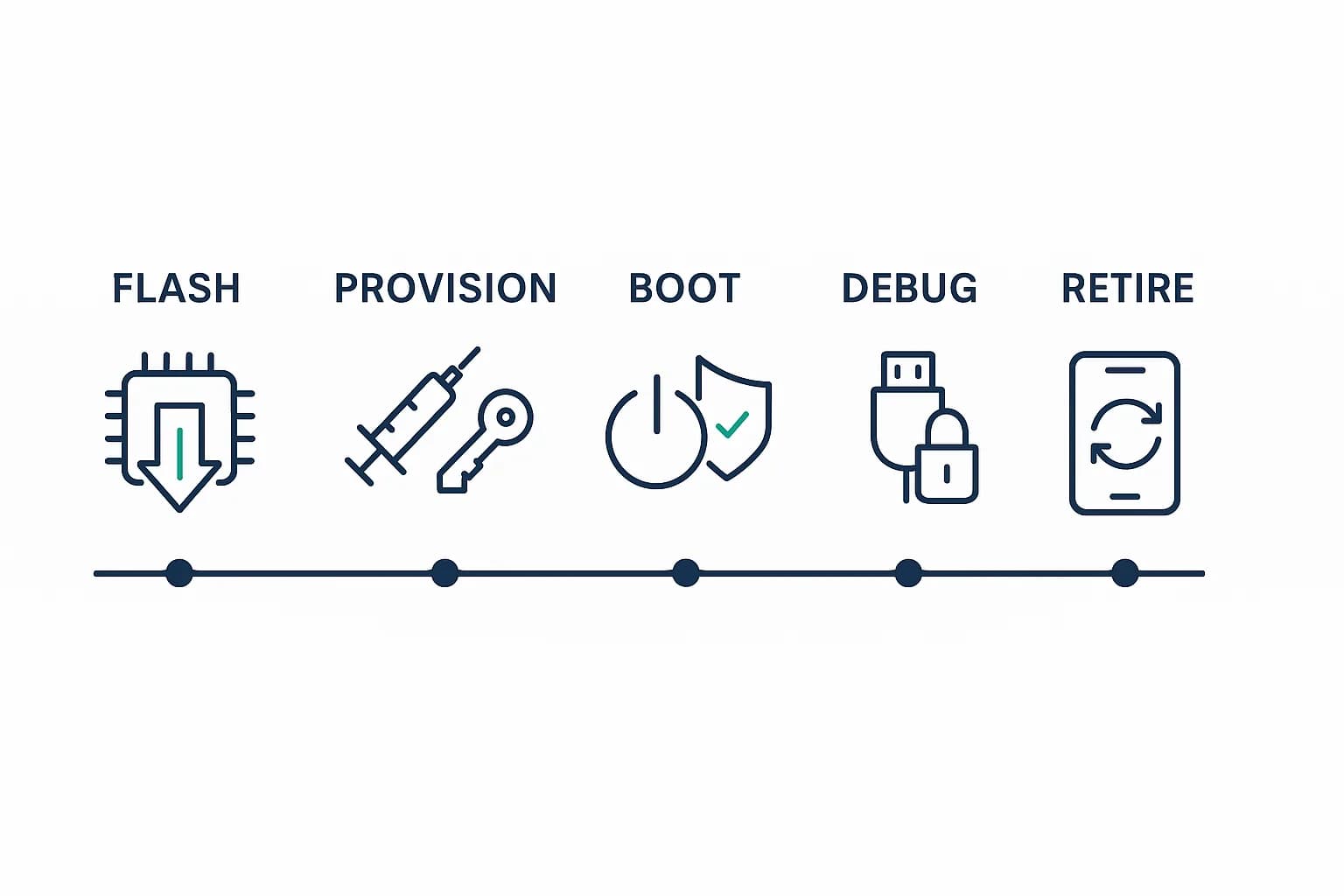
1. Secure firmware flashing
The flashing step decides what software every unit runs. The SOP should specify the approved firmware version and its checksum, the signing requirement, the exact tooling and settings, and a verification that the unit booted the intended signed image. It must make shipping a debug or unsigned build impossible by procedure, not just by good intentions.
2. Key and credential provisioning
Devices that talk to a network need identities: device keys, certificates, and initial credentials. The SOP covers how secrets are generated, injected, and confirmed unique per device, who has access to the provisioning system, and the hard rule that no two units ship with the same key or a default password. Handling of the key material itself, including how it is stored and destroyed, belongs here.
3. Enabling secure boot
Secure boot is only protection if it is actually switched on and locked before the unit leaves the line. The SOP should define the step that enables secure boot, blows the relevant fuses or sets the one-time configuration, and verifies it cannot be disabled. A unit that left with secure boot un-fused is a unit an attacker can re-flash freely.
4. Debug-interface handling
JTAG, SWD, UART consoles, and test pads are essential during production and dangerous afterward. The SOP needs to state when debug access is used, and the explicit step to disable, lock, or physically protect it before the product ships. An open debug port on a finished device is one of the most common and most serious manufacturing security gaps.
5. Secure decommissioning and scrap
Failed units, returns, and end-of-line scrap still carry keys and firmware. The SOP should describe how a unit is wiped or its secrets revoked, and how scrap boards are physically destroyed so a discarded device cannot be harvested for keys or used to study your firmware. Decommissioning is the step manufacturers most often forget to document.
What each cybersecurity SOP should cover
| Process | The SOP must define | Risk if undocumented |
|---|---|---|
| Firmware flashing | Approved signed version, checksum, verification | Debug or tampered builds ship to customers |
| Key provisioning | Unique per-device secrets, access control, key handling | Default or duplicated credentials across units |
| Secure boot | Enable step, fuse/lock, verification it cannot be disabled | Devices that can be freely re-flashed |
| Debug interfaces | When access is used, and how it is closed before shipping | Open JTAG/UART ports on finished products |
| Decommissioning | Wipe or revoke secrets, destroy scrap boards | Keys and firmware harvested from discarded units |
Line SOPs vs product conformity: two different documents
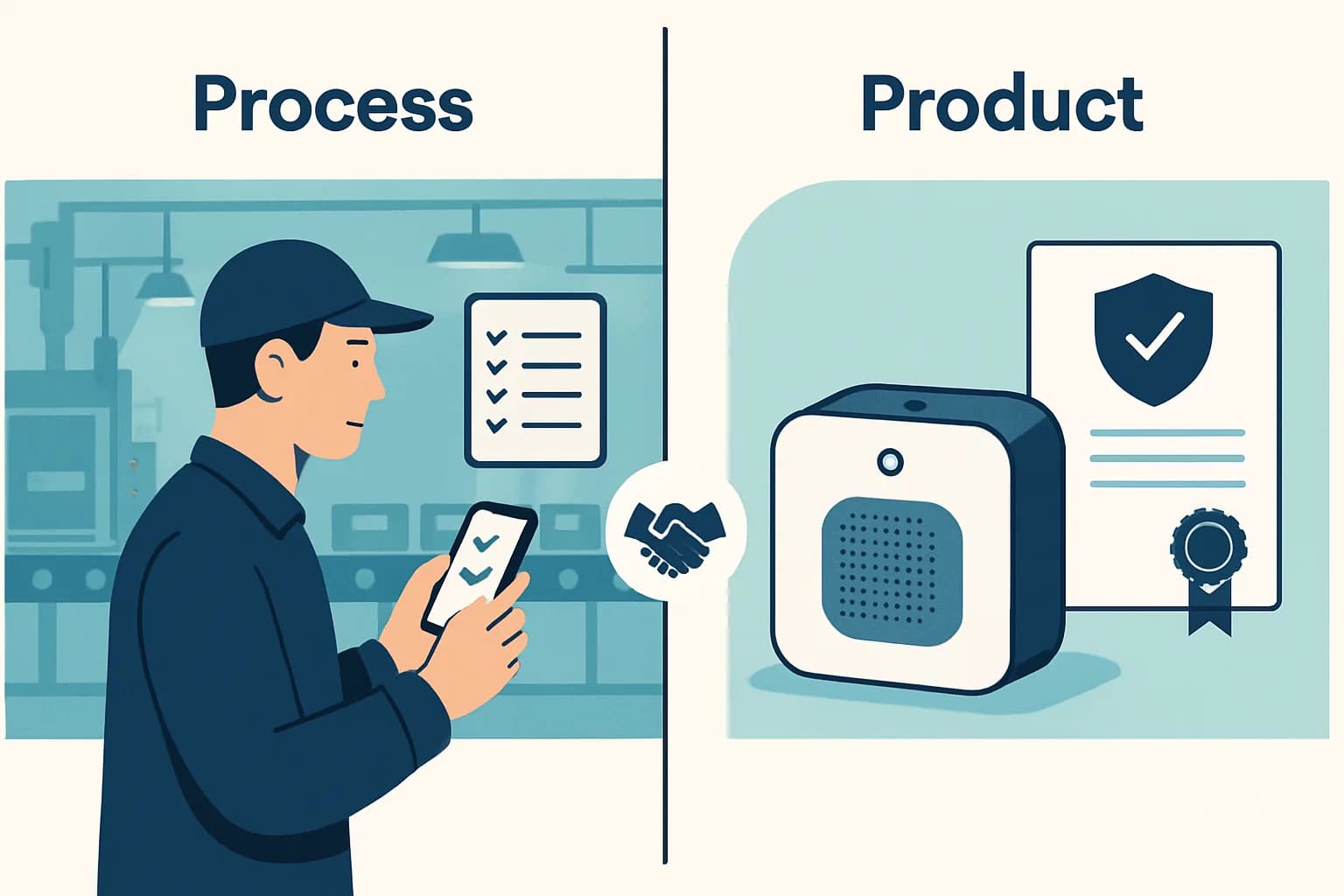
It is worth being clear about a distinction that trips up a lot of teams. A cybersecurity SOP is an internal, operational document: it governs how your line builds the product. A product cybersecurity conformity document, like a Declaration of Conformity, is an external, regulatory artifact: it proves the product itself meets the rules before it can be sold.
For radio and connected equipment sold in the EU, that conformity work is shaped by EN 18031 under the Radio Equipment Directive (RED), and it involves a product-level risk assessment, a technical file, and a Declaration of Conformity. That is a separate discipline from writing line SOPs, and a separate kind of tool: platforms like RedComply automate the EN 18031 risk assessment and generate the Declaration of Conformity for connected-device makers. The two fit together cleanly: your SOPs document and control how the product is built, and the conformity file demonstrates the finished product is compliant.
Keep them in their lanes. Do not try to cram regulatory conformity into a shop-floor SOP, and do not assume a Declaration of Conformity says anything about whether your line actually follows its own security steps. You need both.
Getting these SOPs written without slowing the line
The hardest part of a security SOP is capturing what the experienced technician actually does, because they are busy doing it, not writing it down. The most reliable way is to record the real procedure as it happens and turn that into the written steps. With sopmodo, a technician narrates the flashing or provisioning step while performing it and photographs the tooling, and the AI drafts the SOP for review. You document the procedure once, from reality, instead of reconstructing it from memory.
Frequently asked questions
What is a cybersecurity SOP for manufacturing?+
Which production steps need their own cybersecurity SOP?+
Is a cybersecurity SOP the same as a Declaration of Conformity?+
How does this relate to EN 18031 and the RED Directive?+
Who should write the cybersecurity SOP?+
The bottom line
For a connected-device maker, security is a manufacturing discipline as much as a design one. Write a clear cybersecurity SOP for firmware flashing, key provisioning, secure boot, debug interfaces, and decommissioning, capture each one from the people who run the step, and keep them separate from the product conformity file. Build the product right on the line, and prove the product is compliant in its conformity documentation. You need both, doing different jobs.
Try sopmodo
Turn your next walk-through into an SOP.
Record a task by voice on the floor; review and export the written procedure on the web. Bring it to your whole team.